Table of contents
Why visualize a prototype in real-world context
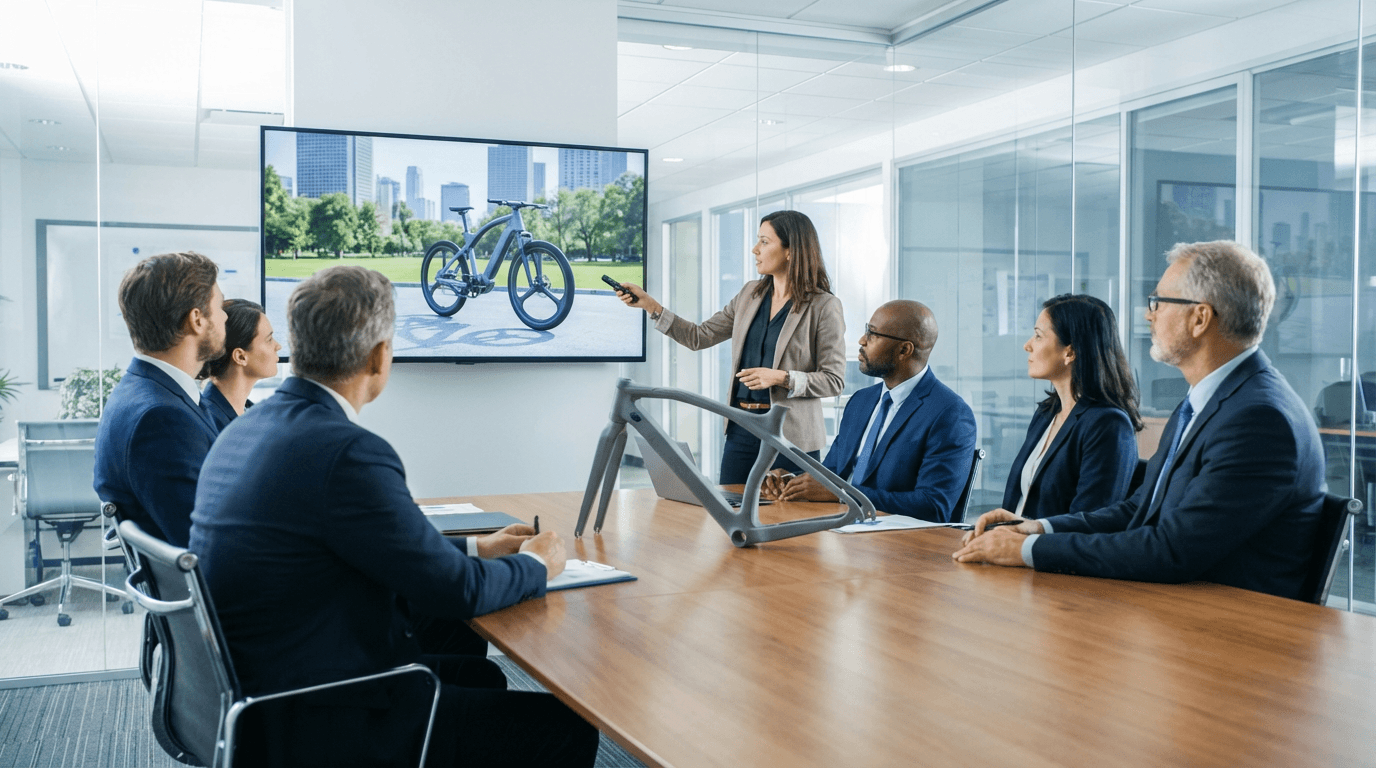
A prototype isolated on a white background tells no story. Whether you are presenting urban furniture, a home appliance, or sports equipment, context makes all the difference. Decision-makers and investors need to project themselves: they want to see your product as it will exist in the real world.
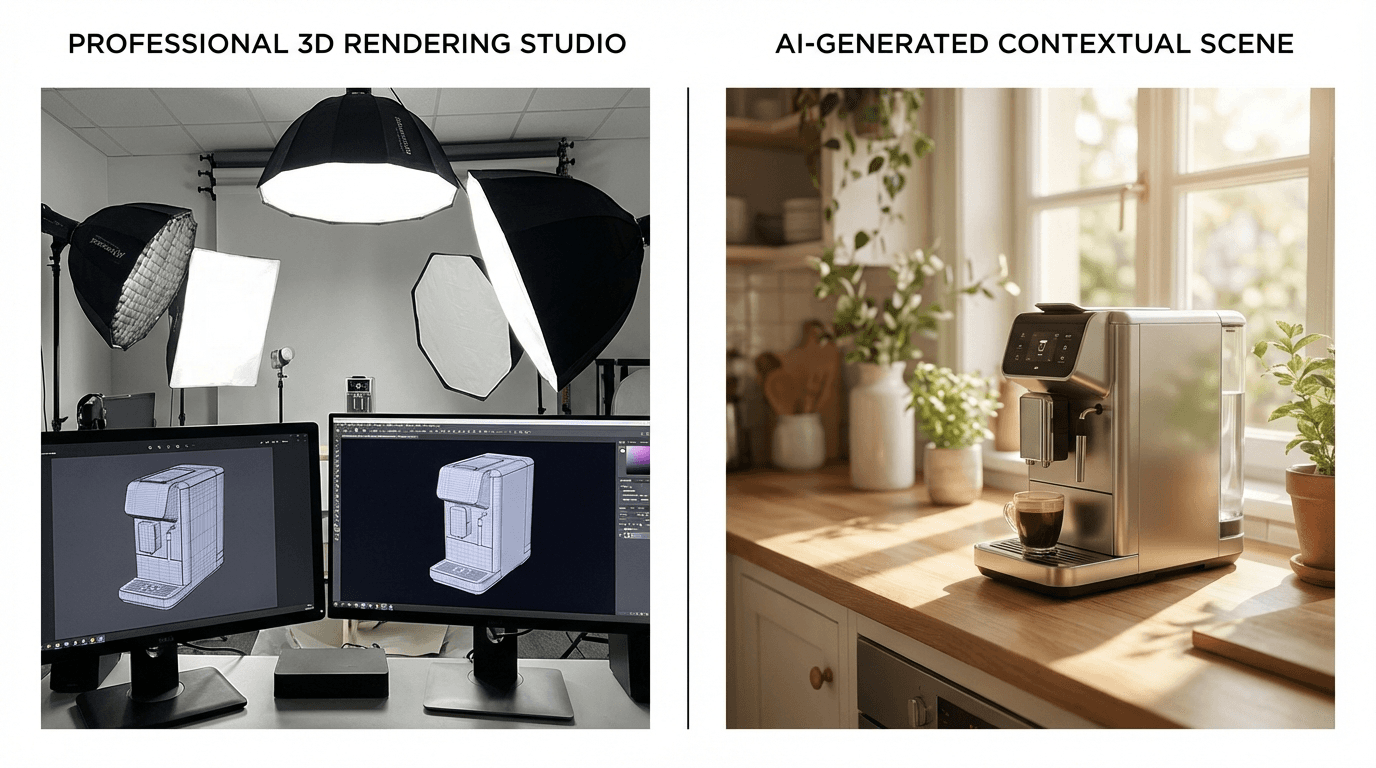
Traditionally, obtaining this type of visual involves expensive photo shoots with physical prototypes, or long hours of Photoshop retouching. Both approaches are slow, costly, and rigid.
How AI visualization works
Prototype Scene uses generative AI models specialized in 3D object understanding. You upload your render — exported from SolidWorks, Fusion 360, Rhino, or any other software — and the AI generates a realistic scene around your prototype.
The algorithm analyzes the proportions, materials, and lighting of your render to create a coherent environment. The prototype itself is preserved identically: no distortion, no alteration of colors or textures.
Available environments
You can choose from five environment types depending on your needs:
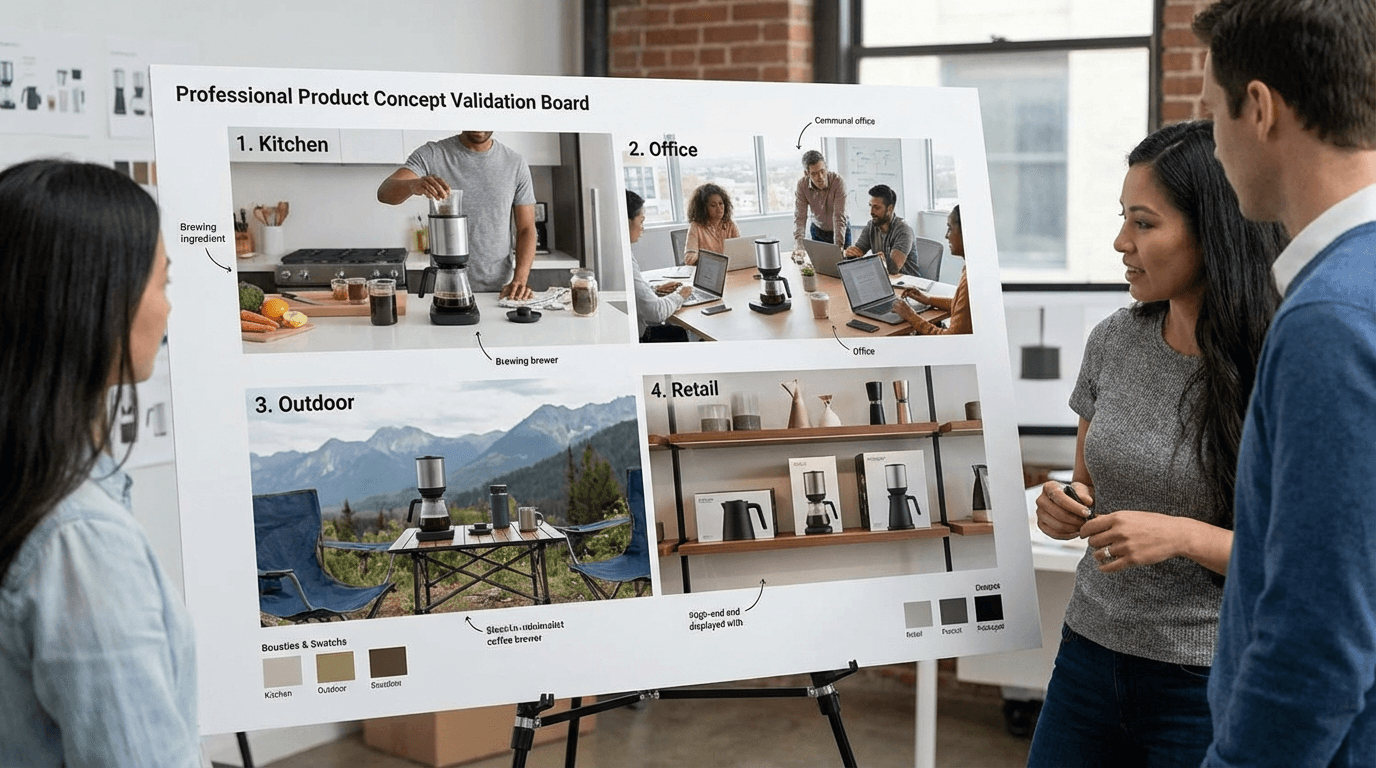
- Public space: ideal for urban furniture, signage, or collective equipment
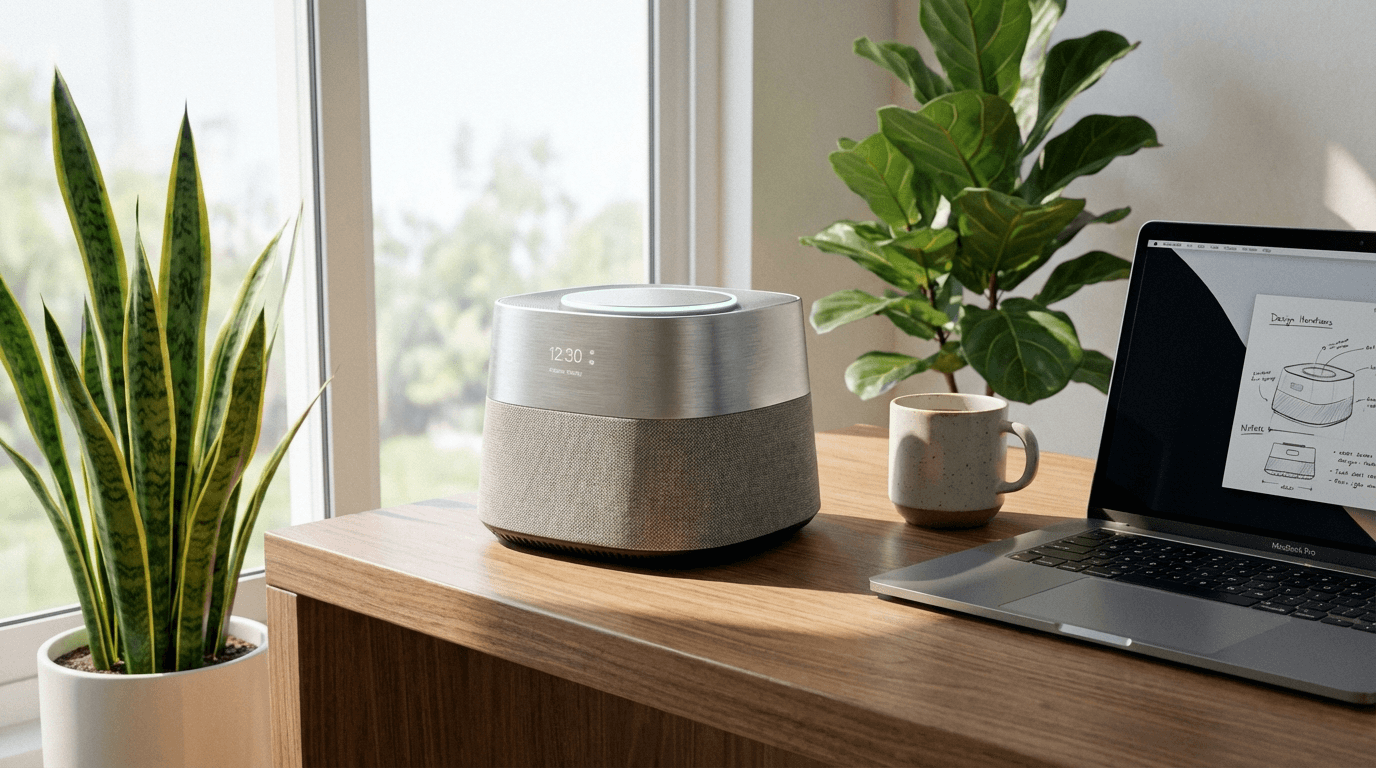
- Home interior: perfect for appliances, small furniture, or connected objects
- Office: suited for professional equipment and desk accessories
- Outdoor nature: for sports equipment, vehicles, or outdoor installations
- Showroom: premium rendering for commercial presentations and catalogs
Considerable time savings
With traditional methods, staging a prototype takes 2 to 5 working days, at a cost of 500 to 2,000 euros. With Prototype Scene, the result is available in under 30 seconds for about 1.50 euros per generation.
This time savings allows design teams to quickly test different staging options, iterate on presentations, and react in real time to client or investor feedback.
Concrete use cases
An industrial designer can generate five staging variants for the same prototype in under three minutes. A manufacturer can create their product catalog before even launching production. A design agency can enrich their client proposals with contextual visuals without mobilizing a photographer.
Real-world context visualization is no longer a luxury reserved for large corporations. Thanks to AI, it becomes accessible to all industrial design professionals.