Table of contents
The challenge of concept validation
In the product development cycle, concept validation is a critical step. Stakeholders — management, marketing, potential customers, investors — must understand and approve the design before committing to significant production investments.
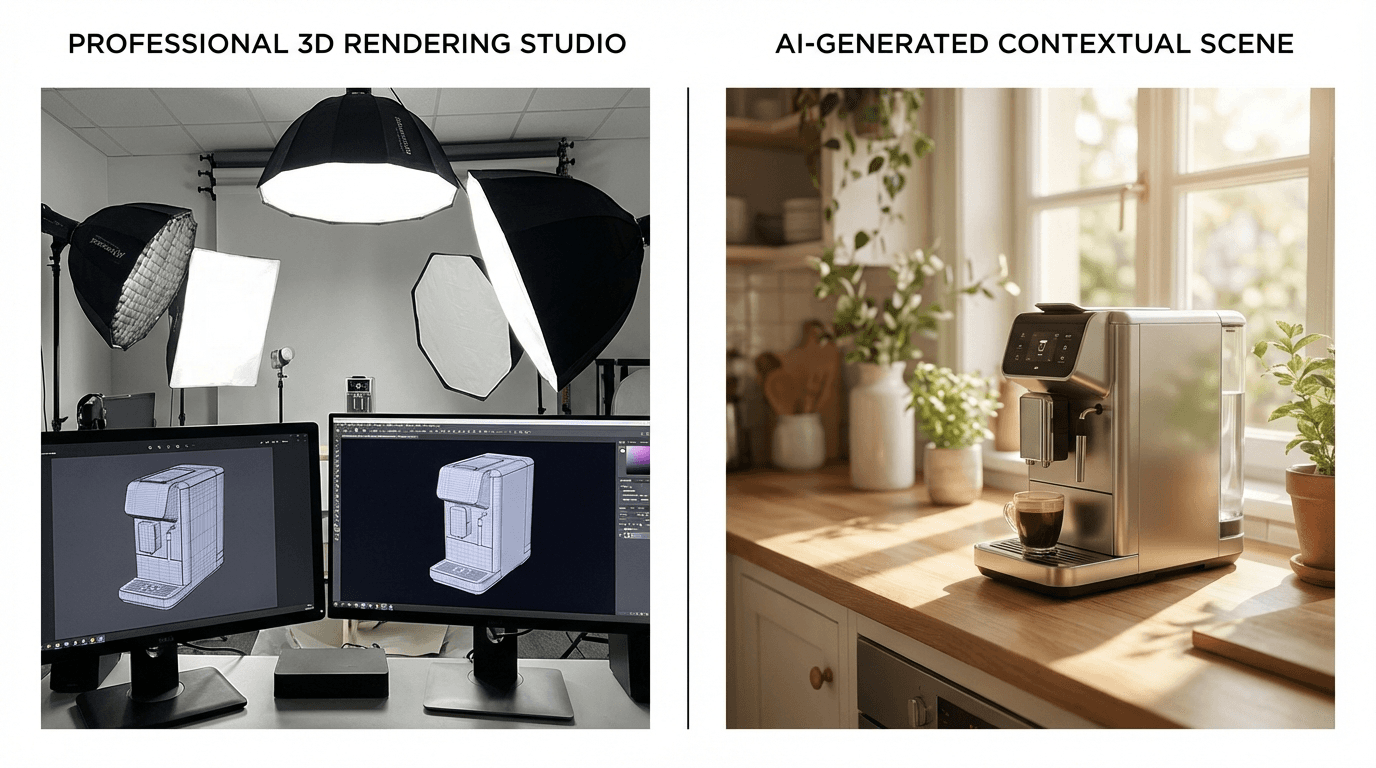
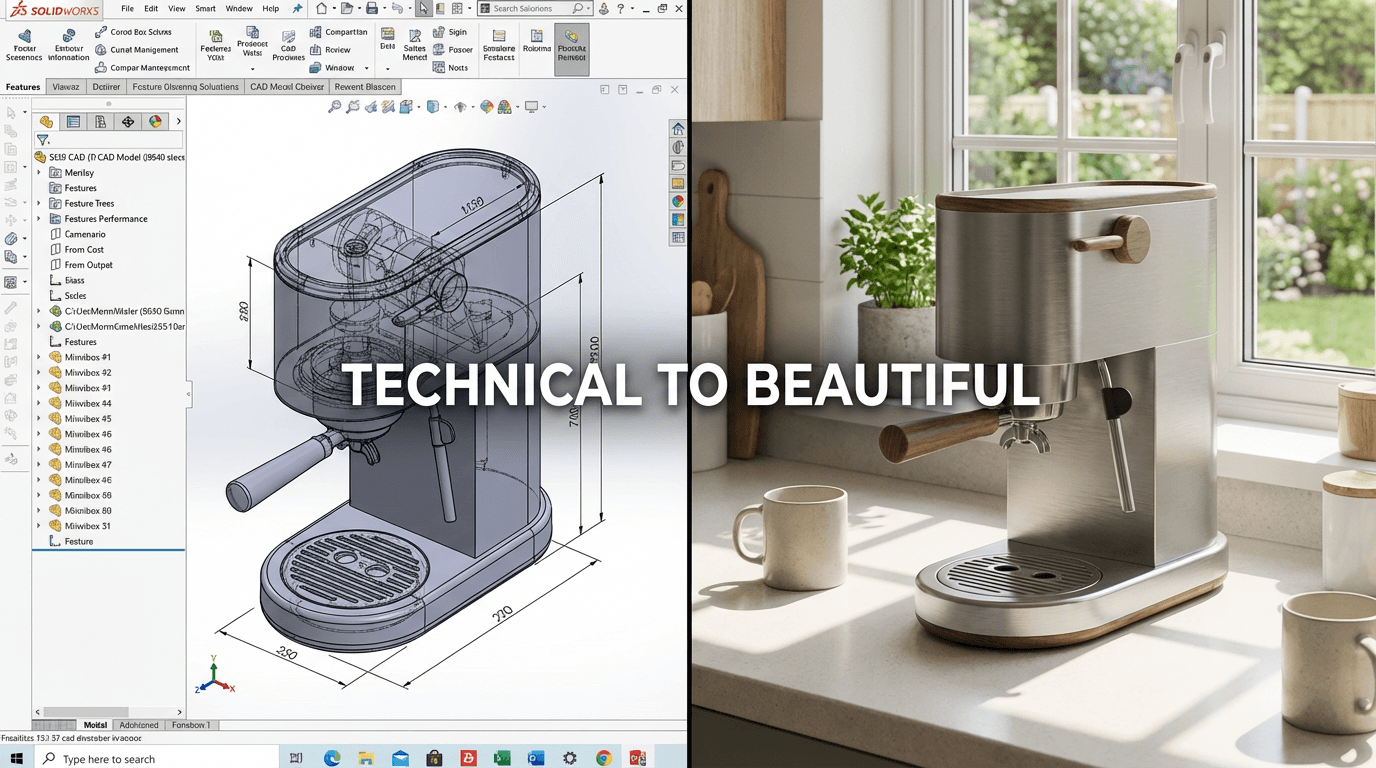
The problem is that technical 3D renders do not speak to everyone. A CAD file or a white-background render does not convey the real usage experience. Non-technical people struggle to project themselves.
Contextual visualization as a decision tool
By placing your prototype in a real environment, you transform an abstract concept into a tangible proposition. The marketing director sees the product in a store. The end customer visualizes it in their living room. The investor understands the user experience.
This ability to communicate visually reduces misunderstandings, accelerates approvals, and decreases the risk of late feedback during the production phase.
An accelerated feedback process
With Prototype Scene, you can generate staging variants in real time during a validation meeting. Someone suggests changing the environment? Generate a new view in 30 seconds. Want to see the product in another context? It is done instantly.
This interactive process transforms validation meetings into productive co-creation sessions. Stakeholders feel involved and decisions are made more quickly.
Testing multiple design directions
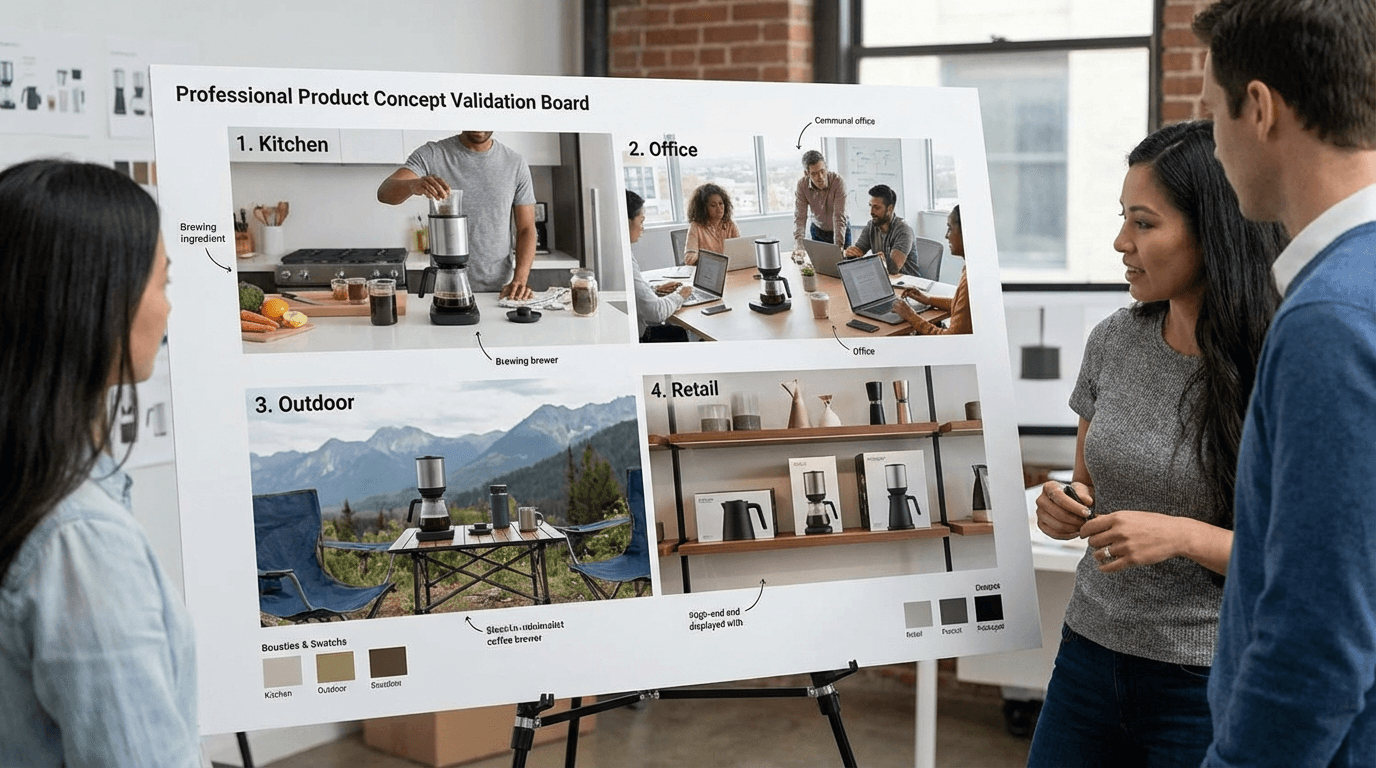
If you are hesitating between several design variants, generate contextual visuals for each one. Present them side by side to stakeholders and collect informed feedback.
This approach is far more effective than presenting technical renders side by side. Real context adds a layer of emotional information that facilitates the choice.
Reducing risks before production
Each design iteration avoided during the production phase represents thousands of euros in savings. By visually validating the concept upstream, you minimize surprises and costly setbacks.
Prototype Scene integrates naturally into a design thinking process: ideation, prototyping, testing, validation. AI visualization accelerates each of these steps by making the prototype immediately understandable by everyone.
Application across different sectors
This visual validation approach applies to all industrial design sectors. An appliance manufacturer can validate the aesthetics of a new oven in a contemporary kitchen. An urban furniture designer can show their bench installed in a municipal park. A hardware startup can present their connected gadget in a modern office.
In each case, contextual visualization transforms a technical decision into an intuitive, shared decision.