Table of contents
Visuals: the key to your investor pitch
During a pitch to investors, your prototype must speak for itself. A 3D render on a white background is technically correct, but it lacks emotional impact. Investors want to project themselves into the real usage of the product, understand its market, and imagine its commercial potential.
Real-context prototype visuals transform a technical presentation into a compelling story. They show not only what the product does, but where and how it will be used.
Preparing visuals for different scenarios
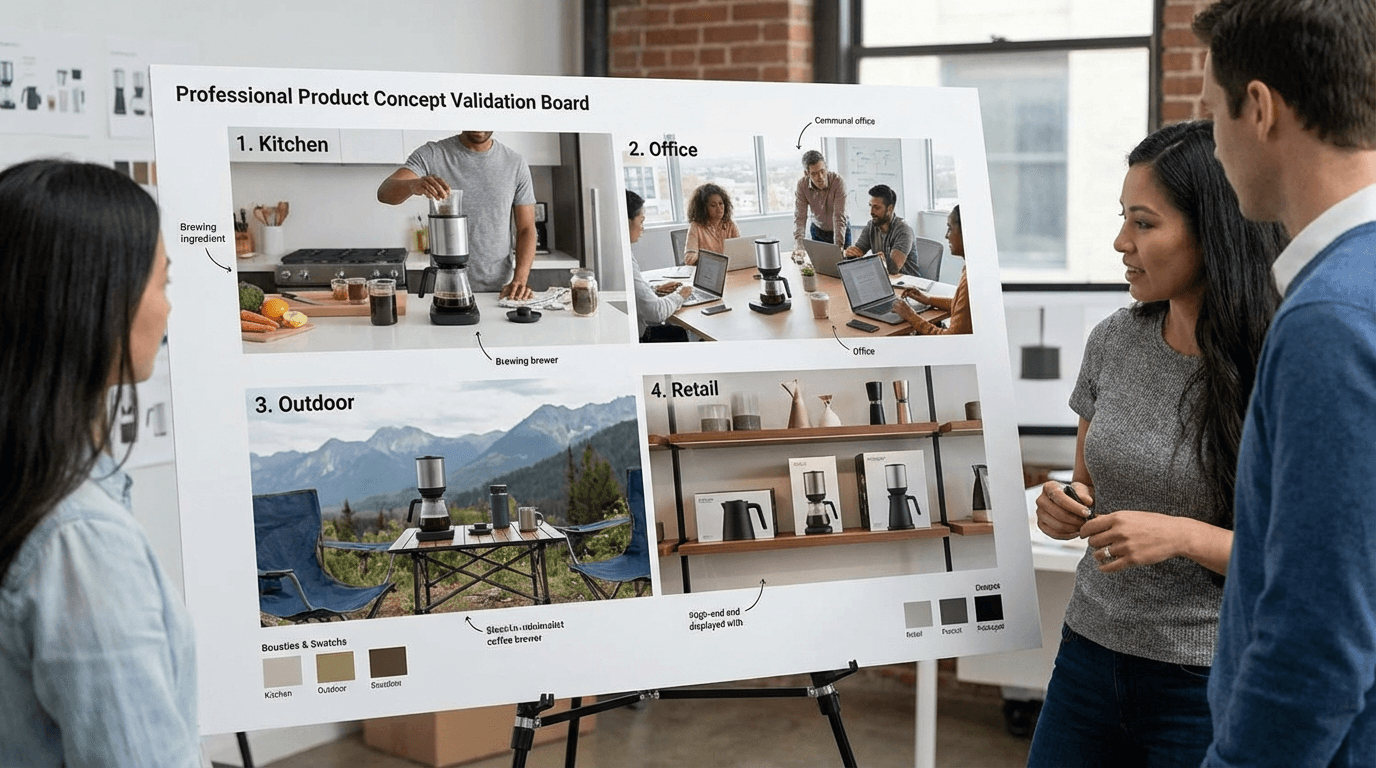
A good pitch deck requires several visuals. Generate staging for each use case you present. If your prototype is a connected furniture piece, show it in a modern living room, a coworking office, and a designer hotel.
Vary environments to demonstrate your product's versatility. Each visual should tell part of the story you present to investors.
Creating visual progression in the deck
Structure your visuals to accompany your pitch narrative. Start with a high-impact visual at the opening, then integrate contextual visuals for each market segment you target.
Use photorealistic style for main visuals and lifestyle style for aspirational staging. Technical style can be reserved for product specification slides.
Advantages over physical prototype photos
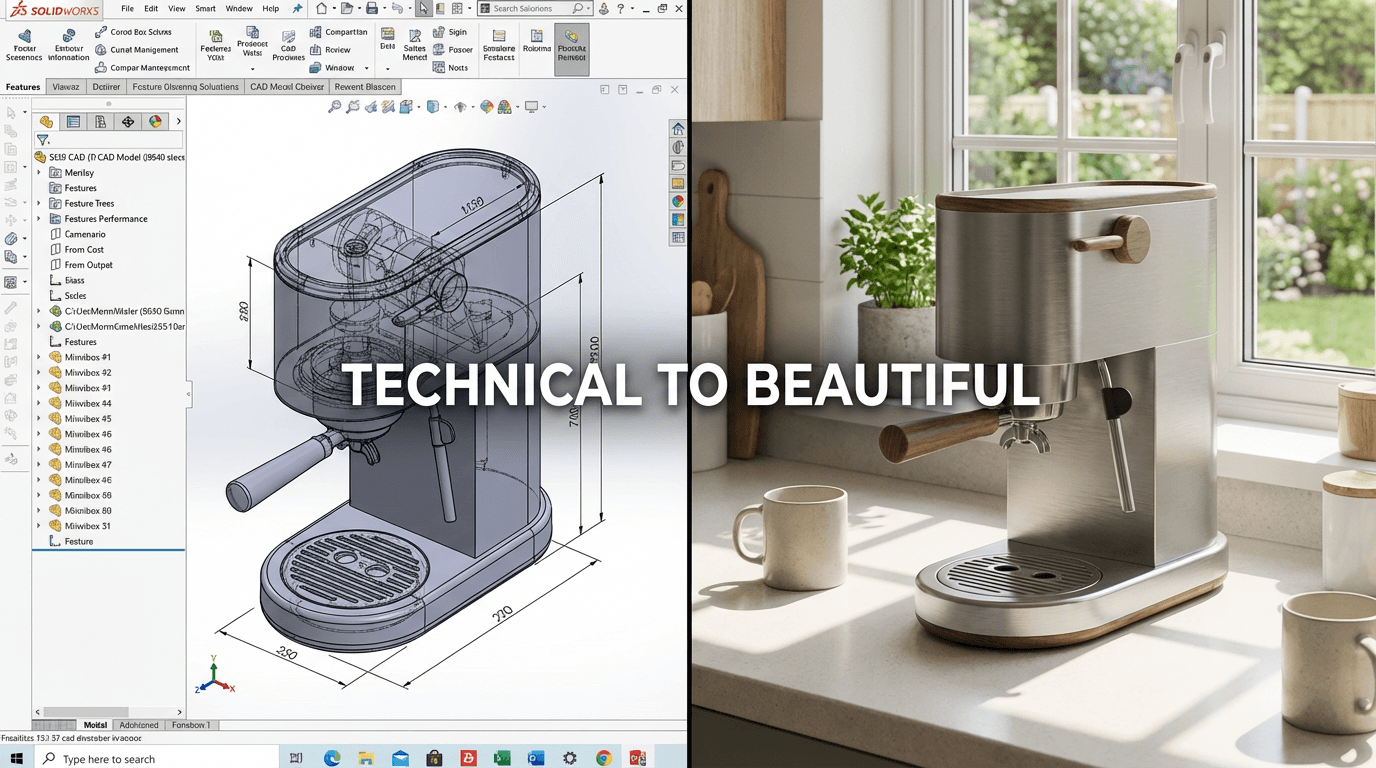
With Prototype Scene, you do not need a finished physical prototype to have professional visuals. You can generate images from a simple CAD render, well before the first unit is manufactured.
This means you can raise funds earlier in the development cycle, with visuals as compelling as finished product photos.
Minimal investment for maximum impact
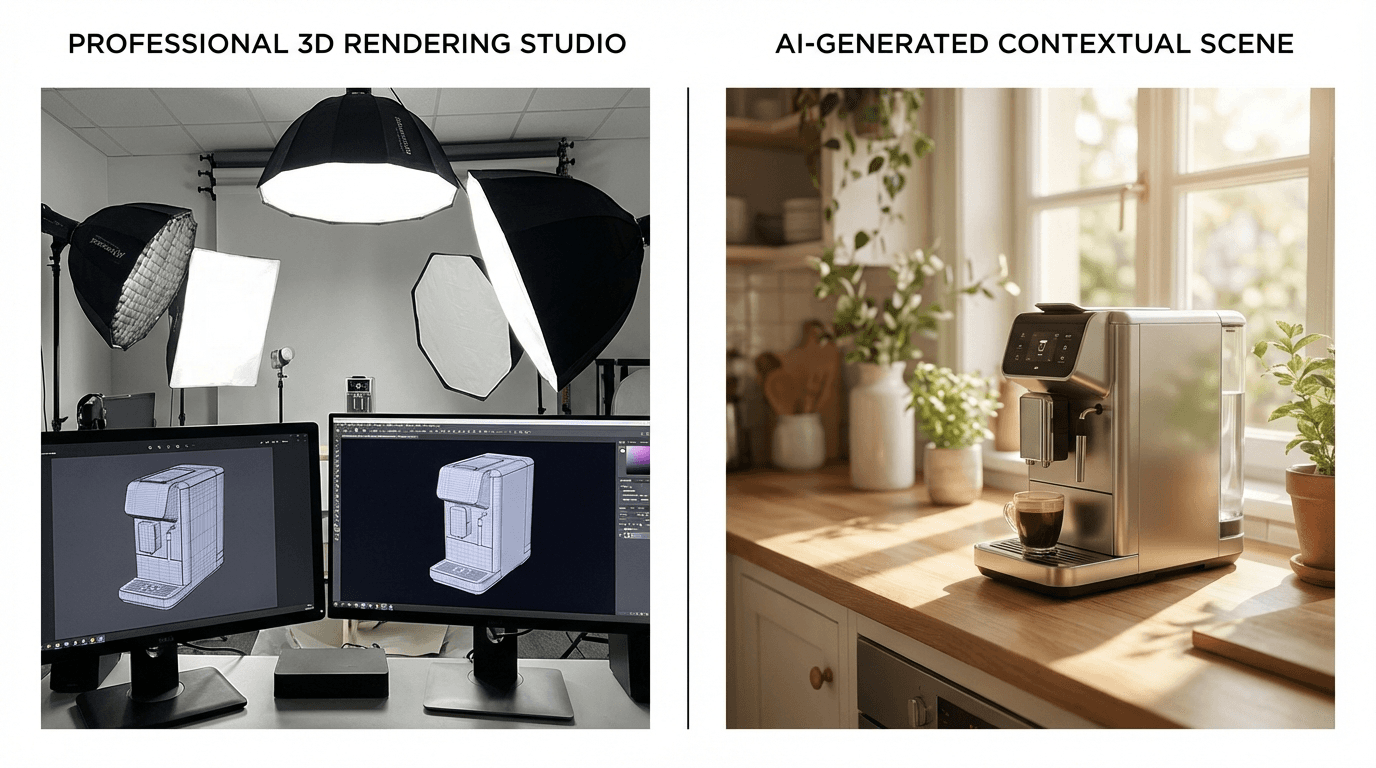
About ten professional visuals for your pitch deck costs less than 20 euros with Prototype Scene. Compare this to the cost of a professional photographer or a 3D rendering studio, and the choice is clear.
Moreover, you can update your visuals instantly if your design evolves between investor meetings. Flexibility is total.